Fanzines and DIY: How Metal and Hardcore Built Their Own Circuit
Fanzines and DIY culture belong to the metal and hardcore scene, even today, alongside the internet and streaming services. The British punk fanzine Sniffin' Glue came out in London in 1976 and became a model for many later zines. This Kellerlärm article asks where these homemade magazines came from and how music circulated away from the big labels.
What Is a Fanzine?
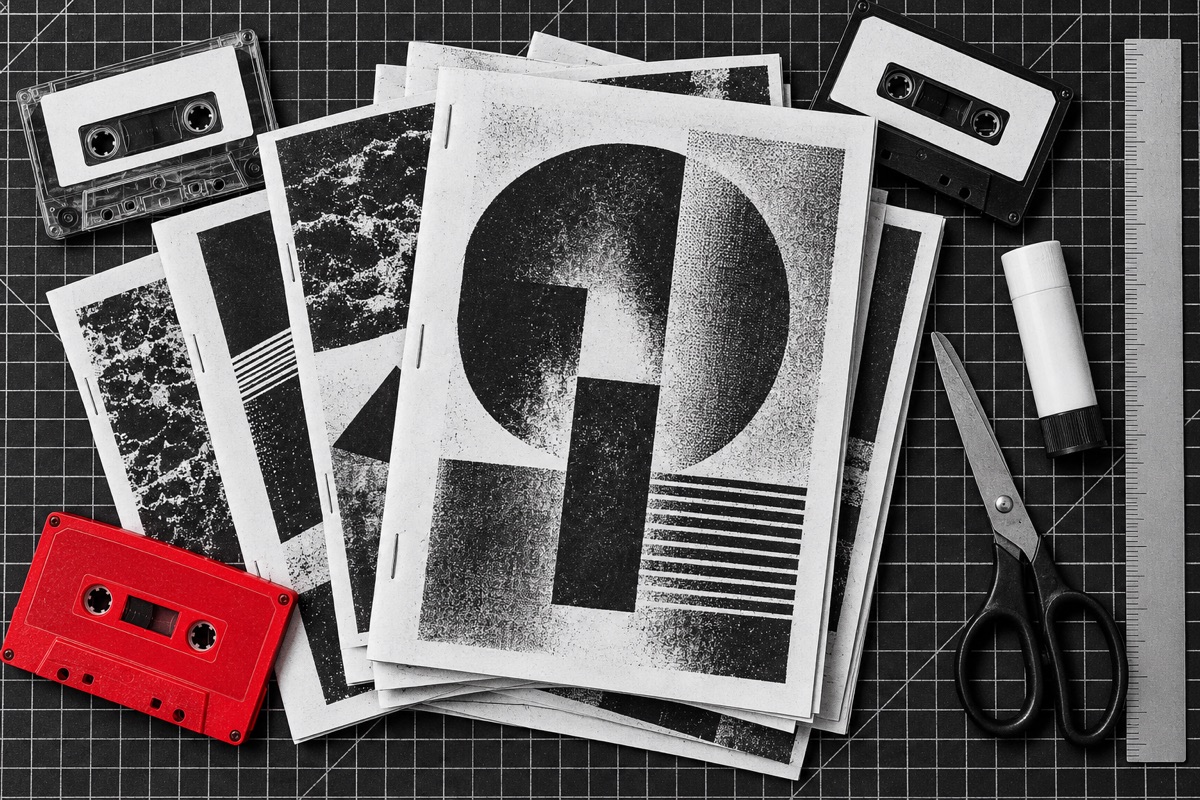
A fanzine is a magazine that fans publish themselves. Usually it is put together by hand and then duplicated on a copier. It takes only a few tools, which is why anyone with something to show and share could make one.
Fanzines and DIY go together from the start: a magazine cut, pasted and copied by hand comes into being without a big publisher. Whoever makes it decides the content and the look. Sniffin' Glue is considered a model for many later zines in this world.
Tape Trading: Music from Across the Border
In the 1980s, fans swapped copies of cassettes by mail. This exchange was called tape trading. The idea was simple: a blank cassette, an envelope and another person's address were enough to send a recording to another city or even another country.
Through trading you got to know bands from other countries. Fanzines and cassettes therefore had something in common: both were made and passed around outside the big labels.
The Independent Label: Who Is Behind It?
An independent label is usually a project run by enthusiasts. Such labels put out records, cassettes and vinyl in small runs, so each release is available only in limited numbers.
For listeners this means that releases from independent labels are harder to find than mass-market goods. The label is one more link in this circuit, which people shape with their passion for music just as much as fanzines and tape trading.
Flyers, Collages and Screen Printing
Show flyers were part of the DIY circuit too. They were made as collages from scraps and then photocopied or screen printed in quantity. The copier thus served not just for duplicating fanzines but flyers as well.
Paper in the Age of the Internet
The internet, streaming services and direct-sales platforms have changed distribution. Even though music is now available online, printed zines are still being made.
Fanzines, tape trading, independent labels and show flyers are four parts of one circuit in which copiers, the postal service and small runs played a major role. More Kellerlärm articles are devoted to the culture of the metal and hardcore scene.